Editorial Work
Books
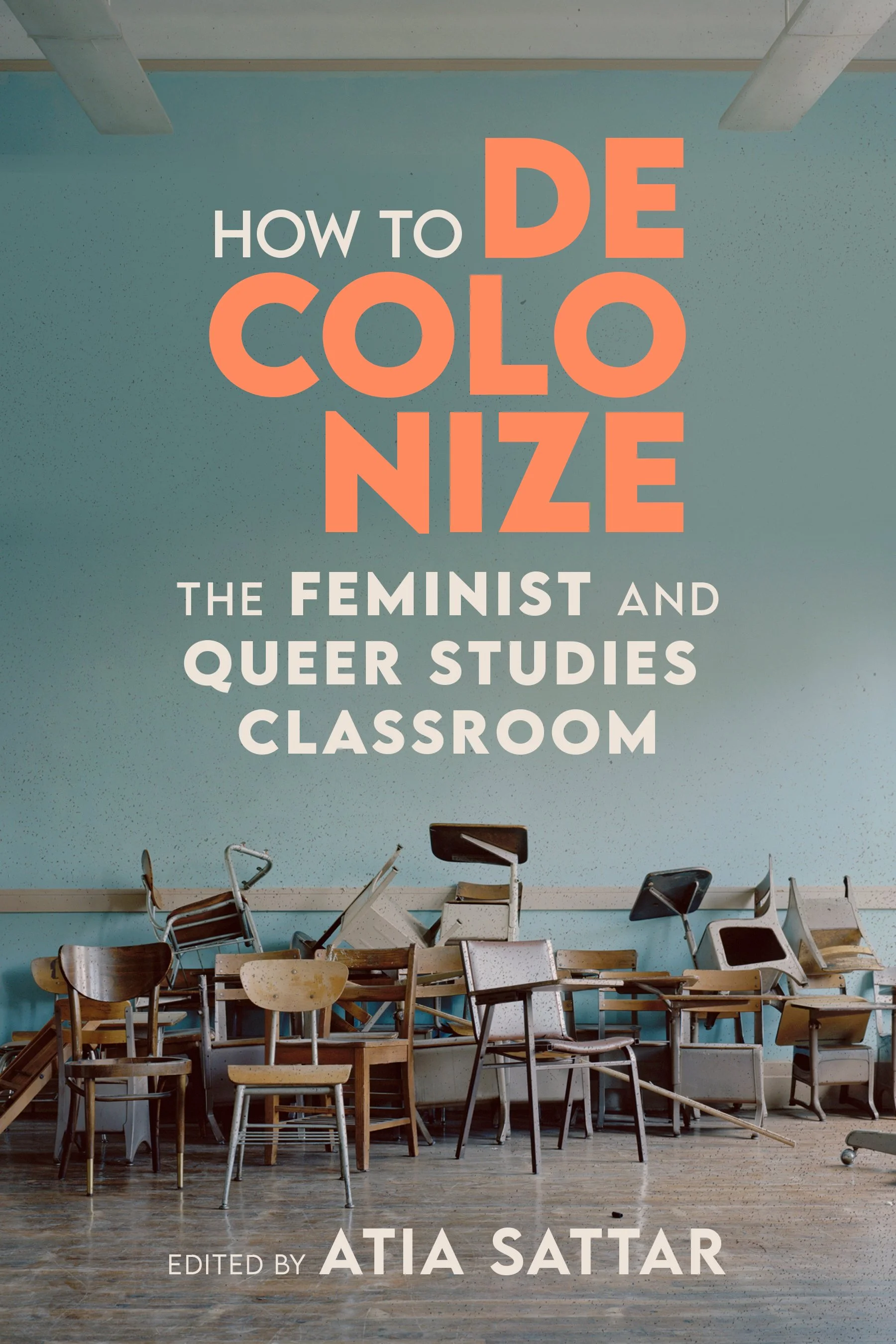
How to Decolonize the Feminist and Queer Studies Classroom edited by Atia Sattar, np press 2025.
How to Decolonize the Feminist and Queer Studies Classroom offers educators accessible theoretical frameworks and practical tools to engage and implement decolonial pedagogies in the feminist and queer studies classroom. While recent research on decolonizing pedagogy largely contextualizes and theorizes the need for such work, this volume moves from theory to practice by centering the words, experiences, and efforts of BIPOC bodies in university spaces. It highlights the voices of BIPOC teacher-scholars of feminist and queer studies as they (1) recount lived experiences of theorizing, facilitating, and occupying the classroom as a site of decolonial thought and praxis and (2) share successful pedagogical practices and materials that promote decolonization, challenging the existing culture of academia. The feminist and queer studies classroom is defined broadly, encompassing both classes in Women’s, Gender and Sexuality Studies departments along with those in other disciplines that utilize the inquiries and practices of feminist and queer work.
Academic Journals
“Feminist Visions and Struggles for a Gradeless University,” Feminist Formations, a special issue co-edited by Atia Sattar, Stina Soderling and Man Kaplan.
,This special issue of Feminist Formations aims to stitch together a practical and theoretical foundation from which to imagine and facilitate feminist futures for higher education. The issue will critically engage with the academic culture of grading and grading practices from a range of intersectional feminist perspectives, particularly focusing on how a feminist pedagogical lens can draw attention to the social and institutional structures that grades function within, including but not limited to the colonial origins of the education system; racism and ableism in assessment; and the gendered care work of feminist education. Our call for papers invited contributions that not only confront grading as a material and institutional framework inimical to feminist pedagogy but also imagine the converse: alternative forms of assessment capable of structuring feminist institutions of higher education. Submissions are currently under review, and the issue will be out in 2026.